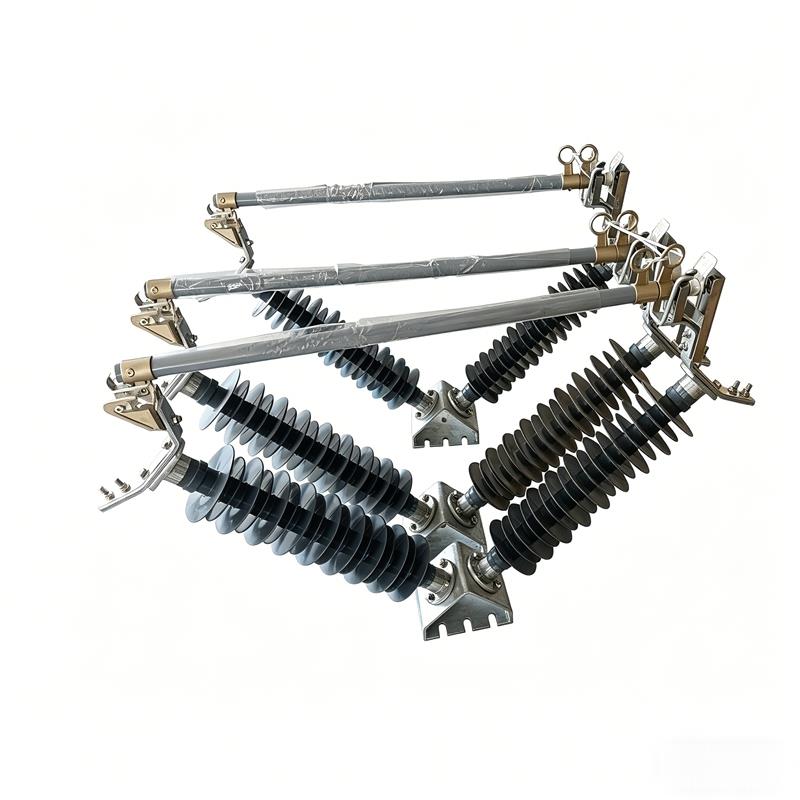
FDGW-40.5/200A Windproof Fuse Wind Power Scenario Dedicated High-Voltage Protection Equipment
The FDGW-40.5/200A is a windproof isolating high-voltage fuse specifically designed for wind farms. It is made of high-quality steel and alloy copper, featuring high conductivity and low operating resistance, with fault current interruption accuracy achieving a zero-failure rate. Its innovative design combines the installation dimensions of the older HGRW1 model with intelligent design, incorporating a new grounding device and expandable insulating boots, significantly enhancing maintenance convenience and windproof performance.
Product Parameters
Core Technical Parameters: Precise matching of technical parameters is crucial to ensure that the FDGW-40.5/200A windproof fuse is suitable for 40.5kV medium-load distribution systems. The core technical parameters are as follows, perfectly matching medium-load distribution circuit requirements:
Installation and Maintenance Points: 1. Daily Maintenance and Replacement
- Use an infrared thermometer to check the temperature of the terminal blocks at both ends of the fuse. Under normal operation, the temperature should be ≤65degC. If it exceeds 85degC, promptly check for poor contact or overload issues;
- When the fuse operates due to a fault, thoroughly investigate the cause of the fault first. After resolving the issue, replace it with the same model FDGW-40.5/200A windproof fuse to avoid repeated fuse operations;
- When replacing the fuse, always use genuine original products. Do not use products with mismatched parameters or from unauthorized channels to ensure consistent protection performance and the safe operation of the distribution system.
2. Installation Precautions
- Before installation, carefully verify that the rated parameters of the FDGW-40.5/200A are consistent with the requirements of the distribution circuit to prevent protection failure due to parameter mismatch;
- Ensure that the fuse is fully inserted and the housing is in close contact with the mounting base during installation to prevent local overheating caused by poor contact;
- The installation location should be kept away from flammable and explosive materials, with a safety distance of at least 40 cm reserved to prevent hazards from high-temperature splashes during fusing;
- After installation, perform insulation testing to confirm that the insulation performance is qualified before putting it into operation.